welcome. why "weak on sanctification"?

this accusation is often made about lutheran christians. because we focus so strongly on god's justifying grace in christ, and our continual need, as "sinner-saints," to receive god's gifts of grace through word and sacrament, people say we are "weak on sanctification." i prefer to say we are strong on jesus, whose sanctifying work in our lives is the fruit of the gospel all along our lifelong journey. i would much rather focus on what he has done than on anything i might do.

the weekly discussion

each week I set forth a topic to promote discourse about some aspect of Christianity, the church, or the spiritual life. i would love to hear your perspective and thoughts on each week's subject. these discussions are usually posted on mondays, so if you missed this week's post and would like to catch up on the conversation, just scroll down and join us.

October 18, 2009

the weekly discussion—october 18


recently, i listed some of the books that i have been reading lately. for this week's discussion, it would be great to have a conversation about what books have been feeding your mind and spirit.

i'm particularly interested in hearing about books that have given you formative insights in the following areas:
  • the spiritual life with christ
  • the church: its history, life, and ministry
  • loving your neighbor and serving your community
  • truths about life, the world, and/or human nature
  • important people, events, and/or movements in history
  • the relationship between religion and science
it doesn't matter whether the books you recommend are non-fiction, fiction, or poetry, classic or contemporary. i'm just always interested in hearing about good books!

"let the wild rumpus begin!"


today's van gogh

green ears of wheat, 1888

October 16, 2009

the lord's day—oct 18, 2009


20th sunday after pentecost

today's lectionary readings
Isaiah 53:4-12
Psalm 91:9-16
Hebrews 5:1-10
Mark 10:35-45

today's bach cantatas
bwv 48, "o wretched man that i am"
bwv 5, "whither shall i flee?"
bvw 56, "gladly shall i bear the cross"

today's van gogh
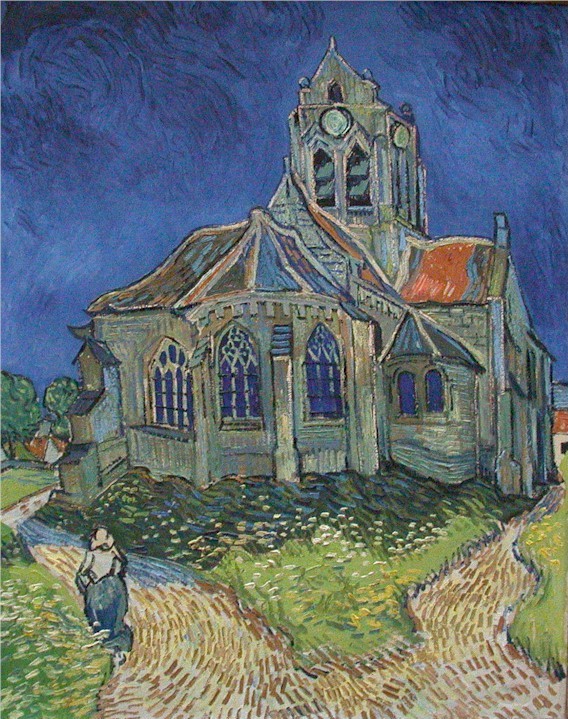
the church at auvers, 1890

today's good news

one of the great leaders of europe over the past quarter century has been václav havel, who emerged at the end of the cold war and became president of czechoslovakia. havel, a writer and playwright, had fought for peace and freedom many years before the Soviet Union fell, suffering constant government harassment and multiple imprisonments because of his writings and work as a political dissident. ironically, this man who had been under the power of a repressive regime, ultimately was voted into a place of power, where during the 1990s he helped lead czechoslovakia into life as a free nation.

upon receiving one of his many awards as a significant force for peace and freedom, havel made a speech about the temptations that come with holding a position of political power. here is part of what he said that day:

Why is it that people long for political power, and why, when they have achieved it, are they so reluctant to give it up?

In the first place, people are driven into politics by ideas about a better way to organize society, by faith in certain values or ideals, be they impeccable or dubious, and the irresistible desire to fight for those ideas and turn them into reality.

In the second place, they are probably motivated by the natural longing every human being has for self-affirmation. Is it possible to imagine a more attractive way to affirm your own existence and its importance than that offered by political power? In essence, it gives you a tremendous opportunity to leave your mark, in the broadest sense, on your surroundings, to shape the world around you in your own image, to enjoy the respect that every political office almost automatically bestows upon the one who holds it.

In the third place, many people long for political power and are so reluctant to part with it because of the wide range of perks that are a necessary part of political life -- even under the most democratic of conditions.

power, said václav havel, is pursued by those with high ideals, who want to make a difference in the world. they are also driven by the natural need to be affirmed and feel important. and third, they seek power because it offers attractive and comfortable side-benefits.

in today's gospel lesson, two of jesus' disciples ask if they might be granted positions of power in his coming kingdom. i'm sure they had many good motivations in asking him this.
  • first, they were right in understanding what was happening through jesus. god's glorious kingdom was dawning! jesus was the messiah, the promised one who would restore the splendor of david's reign over israel and the world. the long-awaited messianic era of righteousness and peace was about to be revealed, and jesus would be at the center of it all, on the throne.
  • second, they wanted to serve and represent him in this kingdom. when something so wonderful is about to take place, who wouldn't want to be an important part of it?
but certainly, there must have been some other motives as well. after all, sitting at jesus' right hand, just next to the throne, would be heady stuff. can you imagine how satisfying and fulfilling that would be? and you know the perks would be great too! no more of this "nowhere to lay our heads" kind of existence. a place in the palace must have sounded pretty nice to them after three years on the road.

václav havel went on to say this about our motivations in seeking power:
I have never met a politician who could admit to the world, or even to himself, that he was running for office only because he wanted to affirm his own importance, or because he wanted to enjoy the perks that come with political power. On the contrary, we all repeat over and over that we care not about power as such but about certain general values. We say it is only our sense of responsibility to the community that compels us to take upon ourselves the burden of public office. At times, only God Himself knows whether that is true, or simply a more palatable way of justifying to the world and ourselves our longing for power, and our need to affirm, through our power and its reach, that we exist in a truly valid and respectable way.
the desire for power may be, for christians, the most misunderstood temptation.

i have watched pastors function as dictators over their congregations, without a clue that their original ideals have become so corrupted that they now brazenly lord it over people. i've seen lay people seize power and hold congregations hostage to their opinions and preferences. i've watched as national evangelical leaders get sucked into the "culture war" mentality and learn to play the game with all the spin and manipulation of the most hard shell, hardball politicians. i've seen brothers and sisters bully one another over the most insignificant issues.

and most of all, i know how much i myself want to be in control, to feel important, to get the cushy assignments, to be seen with the right people, to have others do the grunt work while i enjoy the banquet.

most of the time, we can somehow rationalize what we're doing, claiming it's necessary to achieve a higher purpose. however, i believe that it is the rare person who can successfully navigate the rapids of power.

jesus did, because his modus operandi was sacrifice. from cradle to cross, he laid down his life for us. he came not to be served but to serve. to give his life. to provide a ransom by his own death for those enslaved and imprisoned.

our glory only comes as we die with him. doing so will teach us to treat even the smallest forms of power with extreme caution.

October 13, 2009

book thoughts: what i've been reading


it has been awhile since i've posted updates on what i've been reading, so here's a look at a few of the good books that have come my way in recent months.

the list reflects the fact that my reading for some time now has been heavy on non-fiction, christianity and theology. i've been especially interested in writings on worship, ecclesiology (the church), lutheranism, church history, christianity and culture, and the spiritual life.


An Altar in the World, by Barbara Brown Taylor
a luminous book about encountering god in the common, everyday practices of life. taylor, a former episcopal priest, understands the sacramental nature of ordinary living as well as anyone i've read. her prose shimmers, and has caused me often to feel a bit of the "joy" about which c.s. lewis testified—that strange and sweet sensation that another world is present in mine.


The Lost World of Genesis One, by John H. Walton
walton, a professor at wheaton college, offers this "literal" interpretation of genesis one—and here's the catch—in the context of what we know about ancient near eastern thought. his main point is that a truly literal reading of genesis in its ancient context shows that it is not so much interested in the material origins of the universe (our modern concern) as in how god organized the already-existing materials to function as a cosmic temple from which he reigns as king.


Acedia & Me, by Kathleen Norris
finally, someone has written about my besetting sin! this book is an insightful, sometimes unwieldy combination of personal memoir and spiritual and psychological reflection, laced with long walks through history, literature and theology, with one consistent theme: the deadly sin of acedia (commonly known as sloth). a remarkable book on a sorely neglected aspect of the spiritual life.


Knowing Christ Today, by Dallas Willard
one of our best spiritual writers offers this well-reasoned defense of the legitimacy of moral and spiritual knowledge over against the contemporary notion that religious faith is based only on emotion and preferences. not only is such knowledge legitimate, it is indispensable—"A life of steadfast discipleship to Jesus Christ can be supported only upon assured knowledge of how things are, of the realities in terms of which that life is lived."


Christless Christianity, by Michael Horton
subtitled, "The Alternative Gospel of the American Church," professor horton launches a full-scale attack on "moralistic, therapeutic deism," which he claims is the true religion of american evangelicalism. like luther, he laments the (american) captivity of the church and calls us to reformation. his claim is, that aside from the religious packaging, the church offers little that can't be found in any number of self-help groups available in our culture.


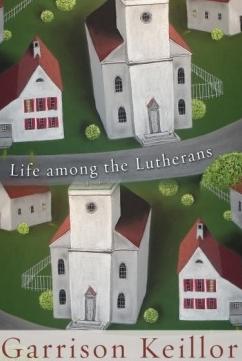
Life among the Lutherans, by Garrison Keillor
being a newbie lutheran myself, i thought i should read this to see what i've gotten myself in for. this collection of "news from lake wobegon" talks paints a pretty good picture of folks who are "merciless in their goodness," "ordinary people doing their best to be good and walk straight in a world that seems to reward the crooked and mock the righteous." oh, and you don't want to miss the service with the gospel birds or the report from the national usher's convention.


today's van gogh
the novel reader, 1888

October 11, 2009

the weekly discussion—october 11


should a follower of christ...
  • watch fox news?
  • listen to keith olbermann?
  • listen to glenn beck?
  • watch michael moore movies?
  • listen to rush limbaugh?
  • be a fan of jon stewart and the daily show?
what do you think about the state of discourse and "news" in the u.s. today?

what do you think christians should do in order to be wise and discerning about the opinions and information we receive through the media in these days?


today's van gogh

old man in sorrow (on the threshold of eternity)
, 1890

October 9, 2009

the lord's day—oct 11, 2009


19th sunday after pentecost

today's lectionary readings
Amos 5:6-7, 10-15
Psalm 90:12-17
Hebrews 4:12-16
Mark 10:17-31

today's bach cantatas
bwv 96, "lord christ, the only son of god"
bwv 169, "god alone shall have my heart"

today's van gogh
the church at auvers, 1890

today's good news

i have good news for you today...
you don't need to be rich for God to accept you into his heavenly kingdom.
nor do you have to be young and attractive.
nor do you have to have your act together.
the fellow who came to jesus in today's Gospel lesson had all those things. we call him the "rich young ruler"—he had wealth. he had youthful vitality. he had authority and seemed to be in control of his life. however, he somehow knew he didn't have it all, because he approached jesus with a question: "good teacher, what must i do to inherit eternal life?" the text indicates he may have been truly eager to find out the answer, because it says he "ran up and knelt before" jesus to ask his counsel.

to be honest, jesus' disciples were probably shocked at that. quite likely it took them by surprise. of all the people in the world, a man like this would be the last one they expected should have doubts that god accepted and favored him. didn't his life bear all the marks of god's blessing? surely if ever there was a righteous man, it would be someone like this! this is just the kind of guy every pastor loves to have in his church, every neighborhood loves to have as a resident, every community loves to have in its midst.

folks like you and me look at a fellow like this and we are humbled. why can't i be like him? why didn't i get all of his gifts and talents? straight-A student. president of his class. most likely to succeed. it all seems to come to him so easily. he gets all the breaks. he knows the right people. whatever he touches turns to gold. oh yes, and he is also a model religious person. (from my mouth to god's ear, i have a daughter who should meet this one!)

and yet...

he doesn't seem to have what jesus is talking about—a place in the kingdom of heaven. he has recognized something different in jesus' teaching, a call to something beyond his culture's idea of success. his heart has been awakened to another reality, and suddenly, he wants more.

so he asks jesus, "what must i do to inherit eternal life?" in common fashion, jesus answers with questions of his own—"why are you asking me? you know god's commandments, don't you—the ones moses gave?" well, that was like asking a college graduate to recite his ABCs. he might have been insulted. surely, there must be something more, he might have thought. after all, i'm rich. young and vibrant. well-positioned in life. devout and faithful in my religion. what's left? there must be something more to it than that!

"ok, one thing." said jesus. "give it all up, and come, follow me."

there it was—the one option that was totally out of the question. this young man had been taught since infancy to be the right kind of person, to do the right thing, to pursue excellence in all the various areas of his life, to be wise with his choices so as to avoid the pitfalls of life, to diversify his investments, to build a solid life of integrity, diligence, and righteousness. and now jesus says to him, "do you really want to know what the life of the kingdom is all about? here's how you'll find out: leave your rich, young, in control life behind. throw it all away. turn your back on the whole endeavor and come with me; join my small band of disciples. oh, and by the way, we don't even have a place where we can lay our heads."

of course, the young man said no.

and the text tells us that with love, jesus watched him as he walked away. oh, i can hear some of us now. some of us are tempted to say, "that is just too bad. god could have really done something with a man like that!" and that statement shows that we still don't get it.

the fact is, nobody brings anything to the table when it comes to being accepted by god. if we want to be part of his new creation, his heavenly kingdom, we must get this straight—he is not looking for anything at all from us. a good portfolio and full bank account doesn't mean anything to him. he doesn't care if we're young and healthy and attractive and strong, or if we come to him all weak and broken-down. as for having our act together, being in control, having a good position in life—forget it. none of that matters. it's simply a matter of responding to jesus.

that's good news for most of us, for folks like you and me who would never be described as "rich young rulers". all i have to be is plain ol' me. all i have to do is receive jesus' invitation. all i have to do is give it all away. all i have to do is die.

you see, jesus is not in the business of recruiting the best and the brightest. he's in the business of raising the dead.