welcome. why "weak on sanctification"?

this accusation is often made about lutheran christians. because we focus so strongly on god's justifying grace in christ, and our continual need, as "sinner-saints," to receive god's gifts of grace through word and sacrament, people say we are "weak on sanctification." i prefer to say we are strong on jesus, whose sanctifying work in our lives is the fruit of the gospel all along our lifelong journey. i would much rather focus on what he has done than on anything i might do.

the weekly discussion

each week I set forth a topic to promote discourse about some aspect of Christianity, the church, or the spiritual life. i would love to hear your perspective and thoughts on each week's subject. these discussions are usually posted on mondays, so if you missed this week's post and would like to catch up on the conversation, just scroll down and join us.
Showing posts with label reading. Show all posts

January 30, 2010

available now for pre-order

michael spencer, aka "imonk," has written a book, and now the publisher and amazon.com has posted it for pre-sale. 
it will be available to purchase in september, 2010. 

i am convinced this will be one of the best books of the year, filled with insightful commentary on the impoverished state of american evangelicalism and wise counsel for better ways forward.

i encourage you to pre-order it today!

October 20, 2009

"wild things" i cannot control


david brooks writes an insightful column in today's New York Times about the new film, "where the wild things are." from my perspective, brooks sheds some very helpful light on what it means to be "weak on sanctification."

when describing some insights that the film sheds on the subject of character, brooks contrasts the "philosopher's view" of character with the "psychologist's view."
  • the first perspective asserts that individuals have certain ingrained character traits that shape who we are and how we act. i am basically a dishonest person or an honest one. i am either compassionate or unsympathetic. one of the life's great tasks is to develop a deep-rooted character of virtue. then, i can be the "hero" who will always do the right thing and win the day.

  • in contrast, the psychologist's view suggests that our actual behavior is not driven by specific permanent character traits that consistently apply across contexts. i may be honest in one situation while dishonest in another. i have many different tendencies that may be activated by various circumstances and moods. i am made up of what Paul Bloom calls, "a community of competing selves."
the film "where the wild things are" portrays that, even in childhood, we are torn by warring impulses that are difficult to understand and control. the main character, max, is a boy who adores his mother, yet rages against her; who looks up to his older sister, yet trashes her room when he cannot enjoy her in his life as he would like.

in the midst of this turmoil, max makes a fantastical journey to an island where wild things live. each of the monsters he meets represents a member of his own "community of selves." brooks comments on what the lad discovers on the island:

in the movie, max wants to control the wild things. the wild things in turn
want to be controlled. they want him to build a utopia for them where they won't
feel pain. but in the movie max fails as king. he lacks the power to control his
wild things. the wild things come to recognize that he isn't really a king, and
maybe there are no such things as kings.

the philosophers teach that once we achieve virtue, we do virtuous things. However, the view represented here shows that...

...people have only vague intuitions about the instincts and impulses that
have been implanted in them by evolution, culture and upbringing
[and, I would
specify, our sinful nature]. there is no easy way to command all the wild things jostling inside.

that may be one of the clearest statements of the christian's spiritual struggle that i've read—"there is no easy way to command all the wild things jostling inside." i want to think that if i can only be king and rule over them, all will be at peace and there will be no more sadness. but i am not really a king, indeed, there really are no such thing as kings among ordinary humans. the answer is not within us.

however, there is a king outside of us who has overcome the wild beasts (mark 1.12-13), whom god rescued from the mouths of the menacing monsters and raised up in victory over them (psalm 22.6-24).

each and every moment, i look to this one, king jesus, to tame the wild beasts within.


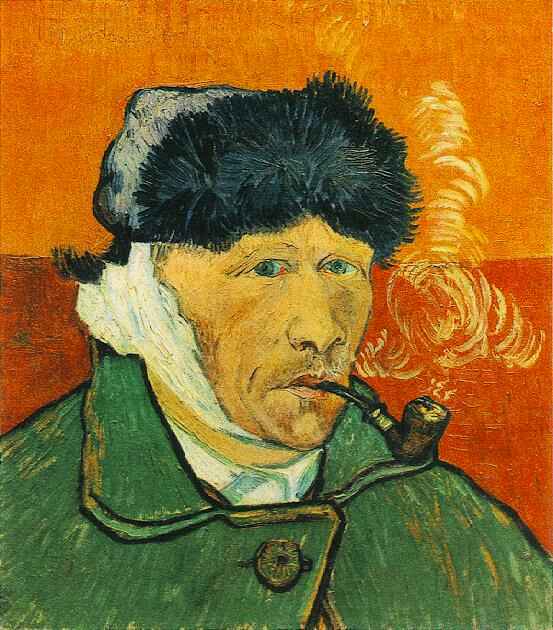
today's van gogh
self-portrait with bandaged ear and pipe


October 18, 2009

the weekly discussion—october 18


recently, i listed some of the books that i have been reading lately. for this week's discussion, it would be great to have a conversation about what books have been feeding your mind and spirit.

i'm particularly interested in hearing about books that have given you formative insights in the following areas:
  • the spiritual life with christ
  • the church: its history, life, and ministry
  • loving your neighbor and serving your community
  • truths about life, the world, and/or human nature
  • important people, events, and/or movements in history
  • the relationship between religion and science
it doesn't matter whether the books you recommend are non-fiction, fiction, or poetry, classic or contemporary. i'm just always interested in hearing about good books!

"let the wild rumpus begin!"


today's van gogh

green ears of wheat, 1888

October 13, 2009

book thoughts: what i've been reading


it has been awhile since i've posted updates on what i've been reading, so here's a look at a few of the good books that have come my way in recent months.

the list reflects the fact that my reading for some time now has been heavy on non-fiction, christianity and theology. i've been especially interested in writings on worship, ecclesiology (the church), lutheranism, church history, christianity and culture, and the spiritual life.


An Altar in the World, by Barbara Brown Taylor
a luminous book about encountering god in the common, everyday practices of life. taylor, a former episcopal priest, understands the sacramental nature of ordinary living as well as anyone i've read. her prose shimmers, and has caused me often to feel a bit of the "joy" about which c.s. lewis testified—that strange and sweet sensation that another world is present in mine.


The Lost World of Genesis One, by John H. Walton
walton, a professor at wheaton college, offers this "literal" interpretation of genesis one—and here's the catch—in the context of what we know about ancient near eastern thought. his main point is that a truly literal reading of genesis in its ancient context shows that it is not so much interested in the material origins of the universe (our modern concern) as in how god organized the already-existing materials to function as a cosmic temple from which he reigns as king.


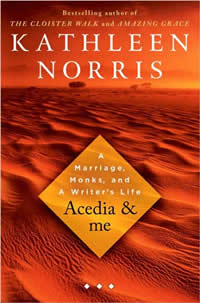
Acedia & Me, by Kathleen Norris
finally, someone has written about my besetting sin! this book is an insightful, sometimes unwieldy combination of personal memoir and spiritual and psychological reflection, laced with long walks through history, literature and theology, with one consistent theme: the deadly sin of acedia (commonly known as sloth). a remarkable book on a sorely neglected aspect of the spiritual life.


Knowing Christ Today, by Dallas Willard
one of our best spiritual writers offers this well-reasoned defense of the legitimacy of moral and spiritual knowledge over against the contemporary notion that religious faith is based only on emotion and preferences. not only is such knowledge legitimate, it is indispensable—"A life of steadfast discipleship to Jesus Christ can be supported only upon assured knowledge of how things are, of the realities in terms of which that life is lived."


Christless Christianity, by Michael Horton
subtitled, "The Alternative Gospel of the American Church," professor horton launches a full-scale attack on "moralistic, therapeutic deism," which he claims is the true religion of american evangelicalism. like luther, he laments the (american) captivity of the church and calls us to reformation. his claim is, that aside from the religious packaging, the church offers little that can't be found in any number of self-help groups available in our culture.


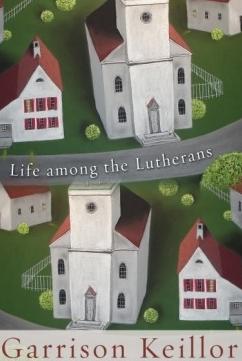
Life among the Lutherans, by Garrison Keillor
being a newbie lutheran myself, i thought i should read this to see what i've gotten myself in for. this collection of "news from lake wobegon" talks paints a pretty good picture of folks who are "merciless in their goodness," "ordinary people doing their best to be good and walk straight in a world that seems to reward the crooked and mock the righteous." oh, and you don't want to miss the service with the gospel birds or the report from the national usher's convention.


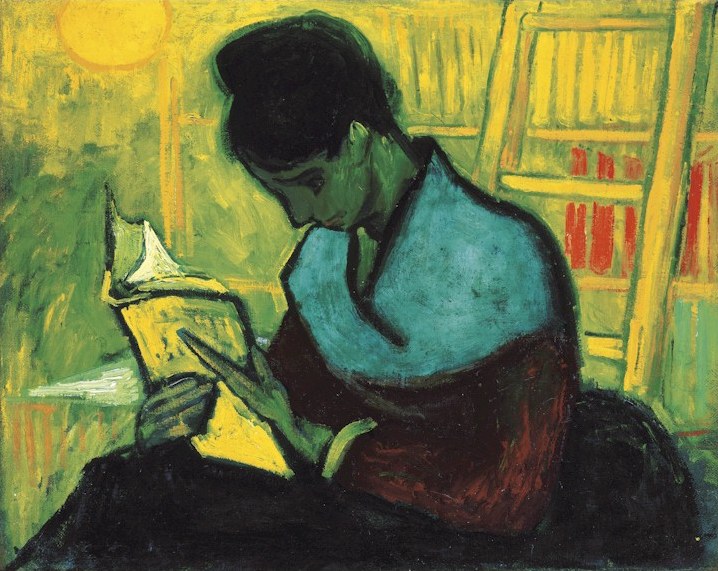
today's van gogh
the novel reader, 1888

September 22, 2009

you must read...


the article i'm recommending for you to read today represents "weak on sanctification 101". if you want to know what the title of this blog means, or go deeper into the meaning of simul iustus et peccator, here is a great place to begin.

michael spencer, aka "the internet monk," is a favorite blogger of mine, and every once in awhile, i go beyond the current posts, dive in to some of his archives, and find words that are even more remarkably profound and helpful. tonight i found his piece called, "when i am weak: why we must embrace our brokenness and never be good christians," in which michael lays out the lies we tell ourselves and others about sanctification. here's a sampling:

It's remarkable, considering the tone of so many Christian sermons and messages, that any church has honest people show up at all. I can't imagine that any religion in the history of humanity has made as many clearly false claims and promises as evangelical Christians in their quest to say that Jesus makes us better people right now. With their constant promises of joy, power, contentment, healing, prosperity, purpose, better relationships, successful parenting and freedom from every kind of oppression and affliction, I wonder why more Christians aren't either being sued by the rest of humanity for lying or hauled off to a psych ward to be examined for serious delusions.

Evangelicals love a testimony of how screwed up I USED to be. They aren't interested in how screwed up I am NOW. But the fact is, that we are screwed up. Then. Now. All the time in between and, it's a safe bet to assume, the rest of the time we're alive. But we will pay $400 to go hear a "Bible teacher" tell us how we are only a few verses, prayers and cds away from being a lot better. And we will set quietly, or applaud loudly, when the story is retold. I'm really better now. I'm a good Christian. I'm not a mess anymore. I'm different from other people.

What a crock. Please. Call this off. It's making me sick. I mean that. It's affecting me. I'm seeing, in my life and the lives of others, a commitment to lying about our condition that is absolutely pathological. Evangelicals call Bill Clinton a big-time liar about sex? Come on. How many nodding "good Christians" have so much garbage sitting in the middle of their lives that the odor makes it impossible to breathe without gagging. How many of us are addicted to food, porn and shopping? How many of us are depressed, angry, unforgiving and just plain mean? How many of us are a walking, talking course on basic hypocrisy, because we just can't look at ourselves in the mirror and admit what we a collection of brokenness we've become WHILE we called ourselves "good Christians" who want to "witness" to others. Gack. I'm choking just writing this.

You people with your Bibles. Look something up for me? Isn't almost everyone in that book screwed up? I mean, don't the screwed up people- like Abraham, Jacob, Moses, David, Hosea- outnumber the "good Christians" by about ten to one? And isn't it true that the more we get to look at a Biblical character close up, the more likely it will be that we'll see a whole nasty collection of things that Christians say they no longer have to deal with because, praise God! I'm fixed? Not just a few temper tantrums or ordinary lies, but stuff like violence. Sex addictions. Abuse. Racism. Depression. It's all there, yet we still flop our Bibles open on the pulpit and talk about "Ten Ways To Have Joy That Never Goes Away!" Where is the laugh track?

What was that I heard? "Well....we're getting better. That's sanctification. I've been delivered!" I suppose some of us are getting better. For instance, my psycho scary temper is better than it used to be. Of course, the reason my temper is better, is that in the process of cleaning up the mess I've made of my family with my temper, I've discovered about twenty other major character flaws that were growing, unchecked, in my personality. I've inventoried the havoc I've caused in this short life of mine, and it turns out "temper problem" is way too simple to describe the mess that is me. Sanctification? Yes, I no longer have the arrogant ignorance to believe that I'm always right about everything, and I'm too embarrassed by the general sucktitude of my life to mount an angry fit every time something doesn't go my way. Getting better? Quite true. I'm getting better at knowing what a wretched wreck I really amount to, and it's shut me up and sat me down.


folks, i have been convinced for a long time now that we simply claim too much for "christianity" and know far too little of the actual good news. god displays his mercy in and through broken clay pots, not fine porcelain vases.

read michael's article. clink the link above, read it carefully, and think upon these things.

and may god forgive our triumphalism and pride.

today's van gogh
the novel reader, 1888